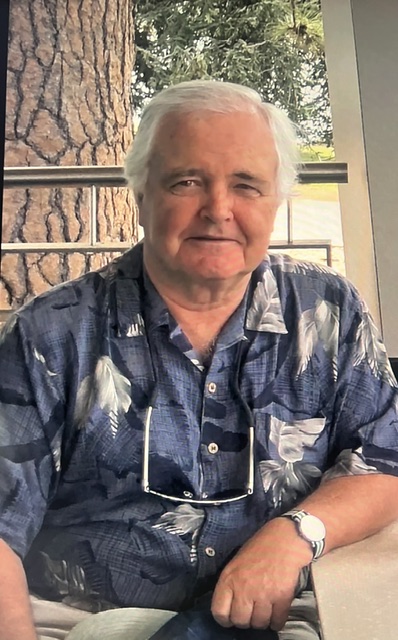
A Message from the President
Huibert H.W. Arnold
President of Global Integrated Care International introduces the governance purpose and institutional context of the demonstration.
Watch introduction
Governance-mediated conversational AI
From AI capability to accountable human-centered action.
Go Directly to the Demonstration →Block A · Purpose
AI is changing from something that answers questions into something increasingly capable of taking action. Across the world, governments, regulators and institutions are responding.
AI transparency and governance obligations are becoming operational.
Government is establishing institutional structures for AI governance while accelerating AI-enabled public services.
New national AI governance machinery and standards are emerging as governments prepare for increasingly consequential AI deployment.
These are different jurisdictions taking different approaches. But they point toward the same fundamental challenge: as AI becomes more capable, who decides what it is actually authorized to do?
And when AI interacts with people in care environments — who remains responsible? Who is accountable? How do we know what actually happened?
AI capability is not AI authority.
Global Integrated Care International is developing a governance-mediated approach in which increasingly capable AI can assist people and professionals without capability itself becoming authority.
Technology may evolve. Models may change. Providers may change. Governance remains above the technology.
A Message from the President
President of Global Integrated Care International introduces the governance purpose and institutional context of the demonstration.
Watch introductionBlock B · Architecture
Before meeting Heather and Mary, there is something important to understand. They are not intended to operate merely according to what an AI model is technically capable of doing. Their behavior is governed by defined boundaries concerning authority, safety, disclosure, action and evidence.


B1 · Permanent Governance Rules
Who may act?
This is the Institutional Accountability Chain.
Capability does not confer authority. Responsibility and accountability follow the person or organization that actually holds authority.
What actually happened?
This is the Operational-State Integrity Chain.
A request is not authorization. Authorization is not execution. An attempted action is not proof of success. And AI-generated language cannot make an action true merely by saying that it happened.
Traceability
Traceability supports both chains.
These rules are treated as invariants across every Heather and Mary interaction. Relevant rules may be implemented directly within the governed AI system prompt, while governance controls requiring external enforcement remain within the wider GIC architecture.
B2 · Heather Architecture
Meet Heather. Heather is GIC's seeker-facing conversational guide. She is designed to help people understand and navigate relevant information while remaining inside defined boundaries.
Heather helps. Heather does not assume human authority.
B3 · Mary Architecture
Meet Mary. Mary is GIC's provider-facing conversational guide. Her architecture extends across 14 operational areas, including telephone and caller handling, scheduling and administration, clinical workflow support, education, professional practice support, referrals, documentation, communications, finance administration, training, safety and escalation, institutional boundaries, and connected tools.
Across them, Mary's architecture governs:
Useful — without becoming unauthorized.
Telephone & caller handling · Reception, scheduling & administrative support · Clinical workflow support · Patient / client education · Physician & dental practice support · Referral & care coordination · Documentation & correspondence · Practice knowledge navigator · Communications & follow-up · Billing, insurance & administrative finance · Professional education & training · Safety, incident & escalation · Executive & institutional boundary · Connected actions & tools.